
Sources for Previous Residents of a Connecticut Address
One Connecticut address leaves evidence across several record systems. The table separates ownership, people associated with a household, and changes to the building. The dates below describe documented collection ranges or an example, not a statewide promise. A local town clerk, library, or archive can confirm what survives for a specific municipality and year.
| Source | Years It Covers | Where Held | What It Shows |
|---|---|---|---|
| Town land-record index and images | Town-specific; Bristol image example from 1787; no statewide cutoff | Town Clerk, legacy portal or RECORDhub, clerk books | Grantor, grantee, deed type, book/page, legal description, recording date, and image if available |
| City directories | Bridgeport 1855–1990; street listings from 1895; other towns vary | Bridgeport History Center, State Library, town libraries, microfilm or digital holdings | Address, occupation, spouse or widow notes, telephone in later years, and address-order listings |
| Municipal reports and town documents | From about the 1850s onward, town and year vary | Connecticut State Library, local libraries, municipal archives | Officials, school visitors, tax and occasional vital lists, police/fire, dog licenses, or poorhouse records |
| Federal census | 1790–1950 publicly released under the 72-year rule | National Archives, State Library, FamilySearch, library databases | Enumerated household, age, birthplace, occupation, and geographic location |
| Building permits and certificates | Town-specific; Stamford example spans 1950 to an October 2013 database split | Municipal building department and online systems | Permit, certificate, applicant or owner as recorded, address, and dated building change |
| Sanborn maps | City and edition date vary | Yale, Library of Congress, State Library, local collections | Building footprint, materials, use, stories, lot context, and street name |
| Probate records | District and record type vary | Probate office, State Library guides, FamilySearch where digitized | Estate, will, heirs, fiduciary, property references, and addresses |
| Newspapers and obituaries | Colonial-era titles to the present; title and index vary | State Library, local libraries, newspaper projects | Death, move, marriage, business, civic role, and property notices |
Start recent chains with the assessor and town clerk; use directories and census for households, maps and permits for structures. A deed marks a transfer, not occupancy.
Connecticut Previous Residents Start With the Parcel
Start with the current municipal assessor record. It may give a parcel number, map and lot, legal description, owner, and separate situs and mailing addresses. Situs is the physical location; mailing is where tax notices go. A mailing address does not prove who lived there.
Connecticut has 169 municipalities, each with its own assessor and Grand List. The statewide OPM Parcel/CAMA viewer can help locate a parcel, but source data vary in quality and age. Use it to identify the town, then confirm with the local assessor and town clerk. A map popup is not a title certificate, and an owner is not necessarily an occupant.
Copy the parcel number, map/lot, street form, and legal description. Older deeds may use a lot description or adjoining owners instead of today's street number.
Walking a Connecticut Deed Chain Backward
Connecticut has no active county recorder or county clerk for deeds. The Town or City Clerk where the property sits holds the land records. Search the present owner as grantee, the recipient, to find the purchase deed; then search its grantor, the transferor, as grantee to find an earlier one. Probate follows districts that can cross town lines, not counties.
- Use the assessor record to write down the current owner's indexed name, parcel ID, map/lot, and legal description.
- In the town clerk land-record index, search that owner as grantee near the likely purchase date. Add spelling or trust variations when needed.
- Read the deed image or request the clerk's book and page. Record the parties, instrument type, date, and legal description.
- Search the grantor as grantee, then repeat with the previous seller. Compare map references and adjoining parcels at each transfer.
- If the online index or image does not reach the needed period, ask the town clerk about older index books, deed volumes, microfilm, or a copy request.
- Grantor and grantee
- The grantor transfers an interest; the grantee receives it.
- Chain of title
- A linked sequence of recorded transfers for one property.
- Legal description
- The deed's written land description, which may identify a parcel more clearly than an old street number.
Search spouse, estate, trust, or company names when present. Keep each deed's book and page; name changes and parcel splits can interrupt a string search.
Bristol's 1787 Images Are One Town's Example
Connecticut land records are municipal. Bristol reports images beginning with Volume 1 on March 22, 1787. That date applies to Bristol. Other towns may have later online starts, index-only access, older books for in-person use, or records split between a legacy service and a newer portal.
The Bristol land-record index page describes its local access route and clerk contact. Across Connecticut, the legacy Town Clerks Portal offers a guest index and paid image access for participating profiles; RECORDhub is part of the ongoing migration. The town profile controls its available years and image options. Fees and copy procedures can vary, so check the clerk's current instructions before ordering a page.
Bristol's date is not another town's cutoff. Ask whether older books are indexed elsewhere or available by mail or at the counter.
Tracing Connecticut Previous Residents Through Directories and Census
Ownership and household history are different trails. A deed records a transfer; a directory or census links people with a name, address, or household at a date. Connecticut's Bridgeport run spans 1855–1990, with street listings from 1895. Other town and year coverage varies, and Hartford and New Haven have gaps. The Connecticut city-directory collections give shelf ranges; use a street section for one address.
Pair a directory year with the nearest decennial census instead of assuming that one source fills every gap. Census images through 1950 are publicly available under the 72-year rule. They supply household composition and enumeration geography; a directory can provide a more frequent address snapshot. Both sources may omit someone or use a changed name.
- Write the street address as printed in the deed, directory, and census, keeping each original form.
- Search the closest directory year by surname, spouse, initials, and street listing.
- Locate the census household and note its year, name spellings, and enumeration district.
- Compare the two dated records with the deed, town report, or obituary before linking people to the address.
- Criss-cross directory
- A street-order section that lets a researcher begin with an address.
- Enumeration district
- A defined area assigned to a census taker; it helps keep an old address in the right census geography.
An absent name may reflect a skipped year, coverage gap, spelling, or spouse indexing, not a death. Obituaries and probate add dated clues.
Connecticut Previous Residents and Permit Dates
Building records date physical changes, not every person at an address. A permit or occupancy/completion certificate may name an applicant, describe work, and date it. A missing item may sit in another database, use a parcel number, or remain on paper.
Stamford provides a specific Connecticut example. Its municipal search database holds historical permits, certificates of occupancy, and certificates of completion from 1950 through October 2013; later records are in ViewPoint Cloud. The department advises searching formats such as Building Permit, PayDay, Street Files, CO, and COC. That split describes Stamford only. Each town sets its own portal and record range.
If a web search fails, give the town building department the address and parcel ID and ask about field cards, plans, certificates, and copy fees. A permit applicant is not automatically a resident.
Connecticut Previous Residents on Maps and Old Town Plans
For an older home, use a map to connect the modern parcel to a historical street layout. Sanborn fire-insurance maps show building footprints, materials, use, stories, and nearby lots. Yale's Connecticut Sanborn collection and the Library of Congress guide provide map access and search fields. Coverage depends on city and edition, so a blank result may require a local-library catalog search.
Connecticut town names, village names, and post-office names do not always match the legal municipality. An old directory can use a familiar village or postal label while the assessor and clerk follow the town line. Streets may also be renamed, extended, or assigned different numbers over time. No statewide renumbering year was located. Check the town clerk's maps, road records, annual reports, old plats, or adjoining-owner descriptions for the municipality and period in question.
Probate and Obituaries at the End of a Connecticut Trail
When a deed chain or directory stops at a death or family transfer, probate and newspaper records can explain the transition. Connecticut probate is handled by districts, not county courts. A probate file may contain a will, inventory, petition, fiduciary record, heir names, or property references. District boundaries can cross municipal lines, so use the official district list and the estate's town rather than searching under a historical county label alone.
The State Library's probate guides point to records at a probate office, library, or FamilySearch when digitized. Access varies; some books need an in-person visit or affiliate-library computer. Newspapers can add an obituary, move, marriage, or property notice. The State Library cemetery collection is incomplete and should not stand alone as proof.
Lawful use. Connecticut land and historical records can support house history, family history, and personal research. Do not use an address trail to follow, intimidate, or harm a living person.
Library and Archive Access for Previous Residents in Connecticut
The Connecticut State Library's History & Genealogy resources connect house history with probate, census, directories, newspapers, and archival finding aids. The Hartford library is at 231 Capitol Avenue, open weekdays 10 a.m. to 4 p.m. Ask staff about access. Some off-site groups were affected by 2025–26 shelving work, so check before travel.
The State Library's Old House Research and History & Genealogy resources link address history to directories, probate, maps, and archival material.
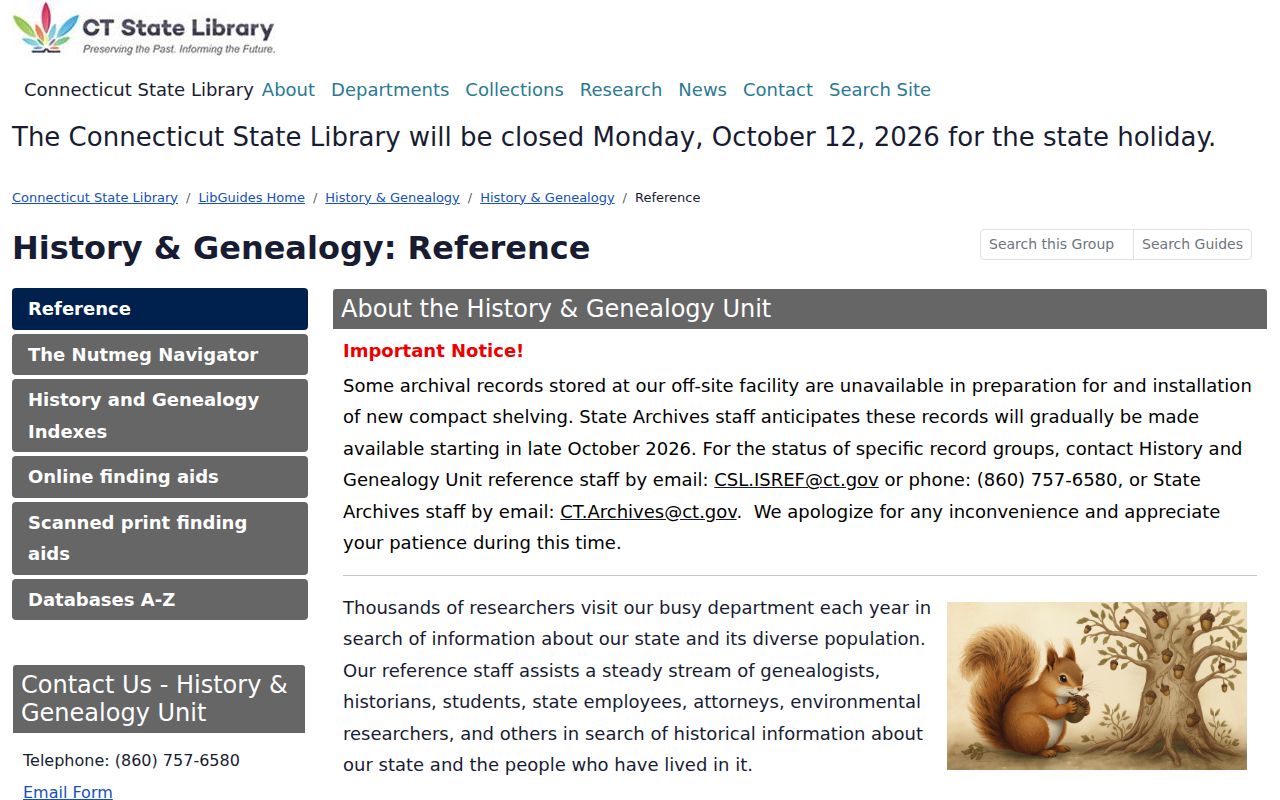
The State Library preserves 55,000+ cubic feet and 5 TB of born-digital records. A reference request can identify the right finding aid, town, probate district, or local repository.
If travel is difficult, contact the town clerk by phone or mail about index years, book/page searches, and copy costs. Local libraries may hold microfilm, reports, maps, and family files. Confirm service terms with the repository; no statewide fee schedule was documented.