
How to Find Connecticut Residents
Start with a town and a clear question. Connecticut has 169 municipalities, and each Town or City Clerk is the local recorder for land records and many town filings. No county recorder exists to search instead. One source lists a person as an owner. Another shows a voter. A third names a party to a court case. Those entries answer different questions, and none is a complete roll of everyone who lives in Connecticut.
A current address question starts at the town assessor or parcel map. Then match an official record to the person or event. Older households need different tools. Ask a library or the Connecticut State Library for a directory, census, newspaper, or town record. Keep the town name with every result. A road can cross a municipal line, and a postal city name does not always tell you which clerk keeps the deed.
- Identify the Connecticut town or borough from the known address, and use the state town list if the municipality is not clear.
- Search that town's assessor by address, parcel, or owner name, then note the situs address and tax-mailing address separately.
- Use the Connecticut voter lookup only to check a person's own registration status; it is not a public street roster.
- Search the town clerk's deed index by the recorded parties, then use a library or archive for older directory years.
- If an online index stops short, ask the record custodian about its counter, phone, mail, or public-record request route.
Treat any online result in Connecticut as a lead. A deed records a transfer. A voter entry concerns election administration. A library directory captures one year, and a missing result may trace to a town boundary, an old spelling, a portal cutoff, or a protected record.
Connecticut's Resident Records Offices
Connecticut splits its record trail between town offices and state custodians. The historical counties still label archives and census pages. They run no recorder offices. Deeds, assessors, permits, voter registration, and many vital records sit with the municipality. Records spanning towns belong to a state office. The official Connecticut town directory is a practical way to find the right municipal contact.
Town and City Clerks
Local deeds, maps, trade names, and town records
Choose the municipality first
Contact details vary by town
Connecticut town directory
State Library and Archives
History and Genealogy reference
231 Capitol Avenue, Hartford
(860) 757-6580
Department of Public Health
State Vital Records Office
Statewide registry and request forms
Town offices also hold local copies
Secretary of the State
Voter status and election records
Statewide information, town-based registration
(860) 509-6100
Voter registration information
Every town keeps its own clerk, assessor, registrar, and library. To find the right office for a particular place, use the official Connecticut cities and towns directory.
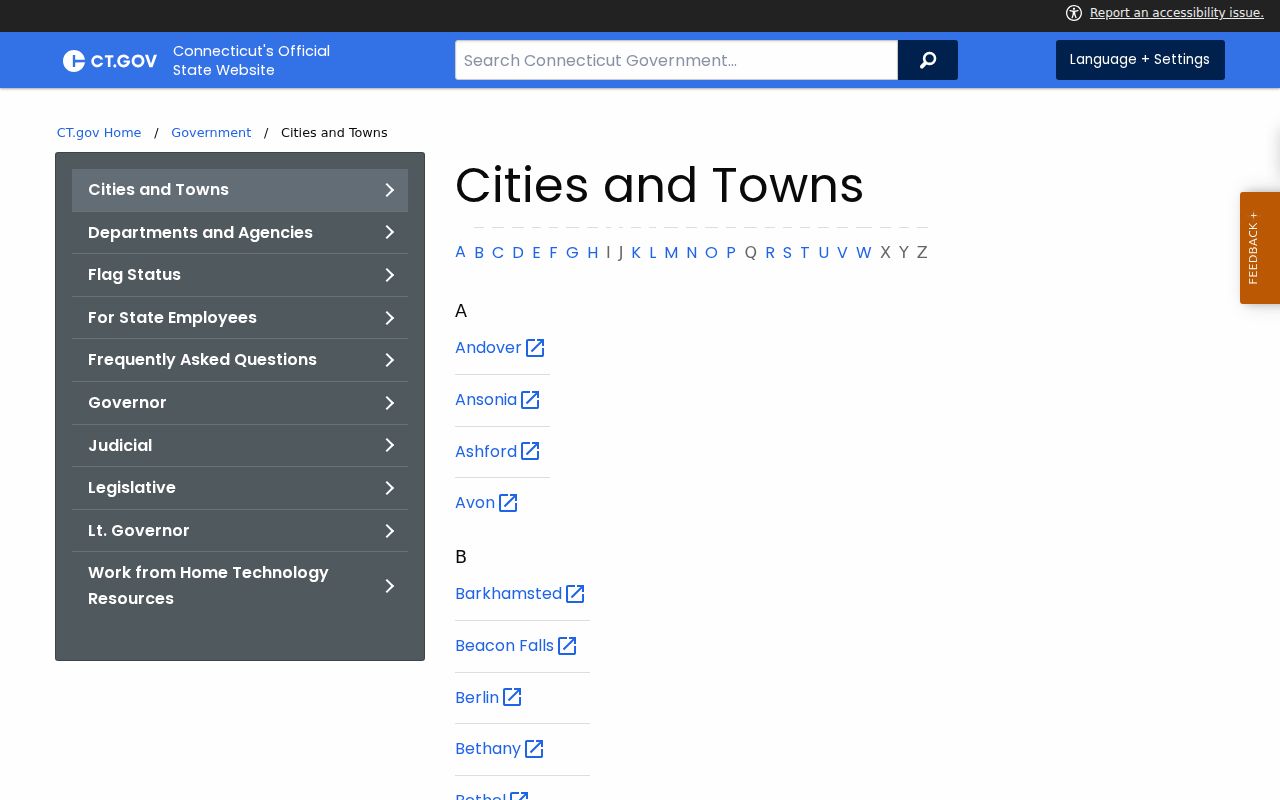
The town list shows the office you need. It identifies the municipal contact that controls the next search step. Hours and copy rules vary by town, so ask for a specific index, year, or map rather than a general list of residents.
The Connecticut State Library in Hartford opens weekdays from 10 a.m. to 4 p.m. Call the reference desk before a visit. Some off-site records may be unavailable during shelving work.
Connecticut Residents and Parcel Search
A Connecticut parcel record often bridges a street address and a named owner. Each town keeps its own Grand List. Assessor systems are municipal too. No single roll covers every town. The statewide OPM Parcel and CAMA project joins town parcel files with standardized property data. OPM cautions that accuracy and completeness vary. The variation runs by municipality and regional Council of Governments. It works as a cross-town discovery layer, not a promise of owner-name results everywhere.
| Assessor field | Search type | How it helps |
|---|---|---|
| Owner name | Text or autocomplete | Try surname and entity or trust forms where a town portal supports them. |
| Street number and name | Text or dropdown | Use the physical address; units and road-name variants can change a match. |
| Town | Required in statewide layer | Choose the legal municipality, not only the postal city. |
| Parcel or account ID | Text | Bridge a result to the map, deed, tax, and permit record. |
| Map, lot, or block | Text | Help find an older deed when the street address is absent. |
| Assessment year | Year filter | Availability varies; the assessment date is October 1. |
Separate the situs from the tax-mailing address. The situs is the physical parcel. The mailing address may point to an out-of-town owner, a trust, an attorney, a business, or an old address. A parcel card can show values, exemptions, land use, or living units. Those fields vary by town. No card lists every person at the property. The OPM Parcel and CAMA hub explains the statewide map and data downloads.
These terms keep a Connecticut residents directory search honest about what the record actually says:
- Parcel
- A mapped piece of land or unit tracked by a town assessor.
- Roll
- A record list maintained for a set purpose, such as the assessor's Grand List.
- Index
- A finding tool that points to a record or image, but may not include the full document.
- Criss-cross directory
- A historical directory section arranged by street or address rather than by a person's name.
Connecticut Land Records Offices
For a deed, map, lien, or trade name, the recorder is the Town or City Clerk in the property's municipality. Connecticut has no county register of deeds. The legacy Connecticut Town Clerks Portal is moving towns to RECORDhub, so check which system serves the town before creating a paid account. Participating towns get a free guest index. Its published access options include daily and monthly subscriptions, image charges, and possible payment fees. Amounts and coverage are town-specific.
When an image is not online, use the clerk's public terminal or ask for a counter or mail copy. A phone call confirms which years are indexed. It also tells you whether an old book is available. A focused request should name the town, the parties, the instrument type, the date range, and the book or page if known. Bristol's official example reaches images back to March 22, 1787, though that is no statewide cutoff.
The portal transition holds a lesson. An online blank has many causes. A town may not have moved yet, the image may not be included, or the name may have been indexed differently. The Street Directory page digs into this chain next.
Current Connecticut Resident Directories
Connecticut keeps no single public roster of every resident. What exists is narrower. An assessor ties a parcel to its owner, a voter tool confirms one person's registration, and court or license files record official interactions. A residents directory built from these pieces works only when each source serves its own purpose. Respect the access rules that come with each one.
| Connecticut source | What it can show | Custodian | Route |
|---|---|---|---|
| Grand List and assessor card | Owner, parcel, mailing and situs fields | Municipal assessor | Town portal, counter, or record request |
| Voter status lookup | One person's current registration and polling place | Secretary of the State and registrar | Individual online lookup |
| Deed and lien index | Recorded parties and instruments | Municipal Town or City Clerk | Town portal, public terminal, or copy request |
| Judicial Branch case lookup | Public case identity, parties, and status | Connecticut Judicial Branch | Online index and courthouse terminals |
| Professional license search | Credential, status, and listed contact fields | Department of Consumer Protection | eLicense public verification |
| Commercial address profile | Compiled records from mixed sources | Private data providers | Often a paid report; verify at the official custodian |
Assessor rolls, voter files, and court indexes in Connecticut answer different questions. A name on a property roll may belong to an owner living out of state. Voting history reveals participation, never ballot choices. A court filing is not proof of a current street address. Commercial address profiles blend such data. Yet they can merge strangers who share a name or cling to stale addresses. Always verify against the original town, state, or court record. Staff directories and association contact pages help you find a custodian or a group. They are not resident rolls.
Connecticut Voter Records and Residents
The Secretary of the State offers an online tool for checking your own registration and polling place. It does not open the full voter registry to public browsing. Town registrars keep the official local records through the statewide system, and a visit to the counter can sort out a status question or a correction. For a statewide resident lookup of voters, a written request goes to the Secretary's LEAD office.
That file arrives as CSV only. It costs $300. Use is restricted to election, scholarly, journalistic, political, or governmental purposes, and the form requires requester details, payment, and a use certification. This is not an open residents directory. Fields can include name, residence, town, party, status, birth year, participation history, and precinct, though month and day of birth stay withheld under current law. Protected voters are suppressed.
Connecticut's voter registry privacy program and the Safe at Home address program add their own layers of protection. A blank address may be a legal safeguard rather than a data gap.
Connecticut Court Records for Names
Connecticut Judicial Branch search routes span several court types, and the forms differ. A party-name search demands a last name. When spelling is uncertain, the guidance allows a single letter. It also allows the first three letters to widen results in E-Services. Begin with the Judicial Branch case gateway or the case-specific portal. Note the docket number and court location. Confirm the match is the person you seek before concluding it.
| Search control | Type | Use and limits |
|---|---|---|
| Party last name | Required text | Try the filed spelling or a short prefix when needed. |
| Party first name | Optional text | Use variants or initials to sort same-name results. |
| Docket number | Text | Direct selection when the case number is known. |
| Case category and location | Filters | Routes vary for civil, family, small claims, criminal, and appellate matters. |
| Status and court events | Filters or tabs | May show pending or disposed status, dates, and event history. |
A docket result can list the filed party name, case number, category, court location, parties, attorneys, events, and dates. It can also show the disposition. The online display is not the official file. Sealed, erased, juvenile, family, and protected-party material may be missing entirely. For older or non-online records, use a public courthouse computer. You can also ask the clerk about pulling the paper file and copies.
Historical Connecticut Resident Directories
City directories, town reports, newspapers, and census schedules share one job. They can anchor a Connecticut household to a given year. Bridgeport's directory run starts in 1855 and runs through 1990. Street listings begin in 1895. The State Library holds directories from across Connecticut, though any town's run may be partial. Each edition records what was printed then, not where anyone lives now.
Bridgeport Public Library's History Center keeps city directories, newspapers, yearbooks, maps, and related files. The Connecticut State Library adds town documents, census material, newspapers, and archive guides. The Connecticut city directory collections page explores that historical shelf in depth. For an old address, pair a street directory with a map or town record. Road names and numbers shift over time.
Connecticut Vital Records Access
Connecticut's 169 towns issue certificates and hold local copies. The Department of Public Health State Vital Records Office runs a statewide registry from July 1, 1897 forward. Events before that date belong to the town where they occurred. The State Library's indexes and historical collections help locate older entries, but they serve as finding aids, not certified copies.
Requests go through the town or state office in person or by mail. Approved VitalChek routes handle some birth, death, and marriage requests online or by phone, with vendor fees added. DPH warns state processing can take up to twelve weeks, while towns usually move faster. A state-issued birth certificate costs $30 and requires photo ID plus proof of eligibility. Birth records stay closed for 100 years, with only limited eligible requesters. Adults 18 and older may request death and marriage certificates. These are subject to privacy exceptions and redactions.
When an early birth is missing from a town book, church registers, cemetery compilations, family papers, and newspaper notices at a library can fill the gap. Each supports family history. None is a certified vital record.
Connecticut Records Request Paths
A Connecticut record that never made it online is often still on a shelf. Ask the office that holds it. Many town and state offices will let you inspect a file at the counter. Others will mail you a copy. The Connecticut Freedom of Information Act backs that up. It gives any person the right to review non-exempt agency records promptly during regular business hours. Put the request in writing. Name the office, the date range, the person or parcel, and the format you want. FOIA has limits, though. An agency does not have to build a fresh resident list for you. It also does not have to run a custom search through its files.
Timing and cost vary. The Freedom of Information Commission notes that many agencies answer within four business days. Yet no single deadline applies statewide. State agency copies are generally capped at 25 cents per page. Municipal charges follow the statute plus the local fee schedule. Before you send anything, ask about electronic copies. Also ask about certified copies, advance payment, and any claimed exemption. A narrow, well-defined request beats asking for every record tied to a common surname.
The Connecticut FOI request and fee FAQ lays out the practical steps. Treat it as a starting point. The agency's own records custodian can explain its form. It can also explain its access route for the specific records you need.
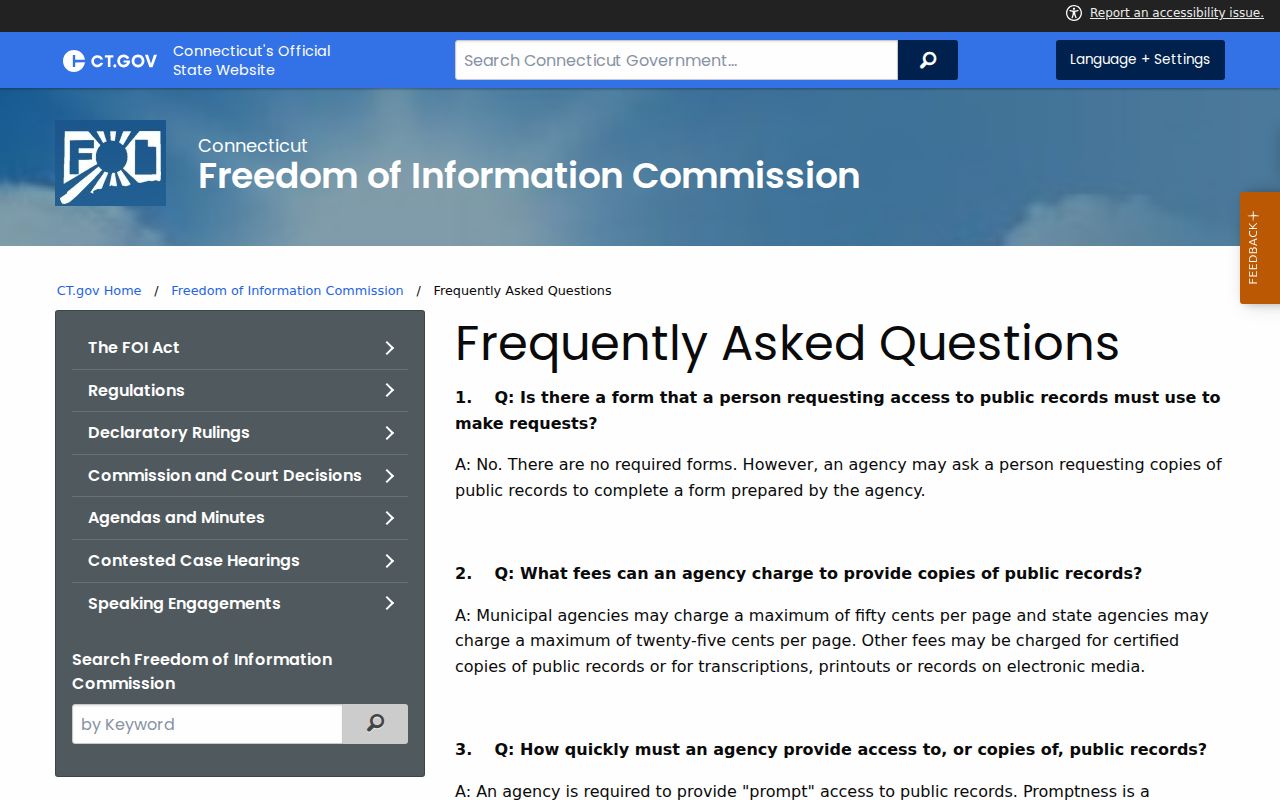
This statewide request route is the entry point. The right custodian still depends on the record: a town office, a state agency, a court, or a library.
Connecticut Custody and Registry Records
Connecticut has no single county jail roster. Lookups run through the Department of Correction instead. Its statewide current-custody search works by name, DOC number, or date of birth. Updates land daily. Coverage means current custody only, with legal and public-safety exclusions applied, so it will not replace an older court file or account for every person who has had police contact. The official DOC inmate information page hosts the search along with its scope notice.
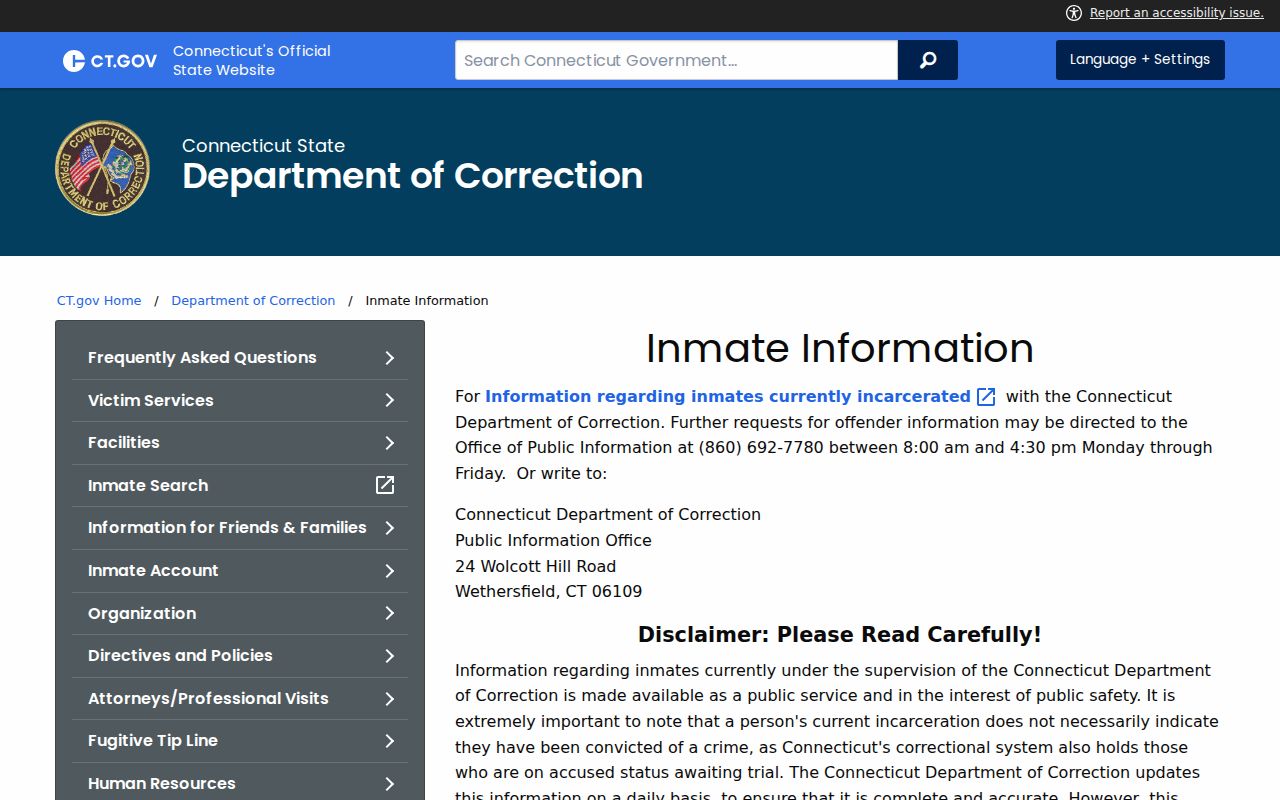
Custody data has a narrow time scope. For any other question, go to the court clerk or the official record itself.
The Connecticut Sex Offender Registry sits apart from custody records. It runs as a separate DESPP search. A public result can list a last-known address, physical descriptors, and offense details. DESPP cautions that the registry is not a risk assessment. Read that warning before leaning on the record. A listed address is not proof that a person lives there now. Open the official Connecticut Sex Offender Registry to review the record fields and its notice.
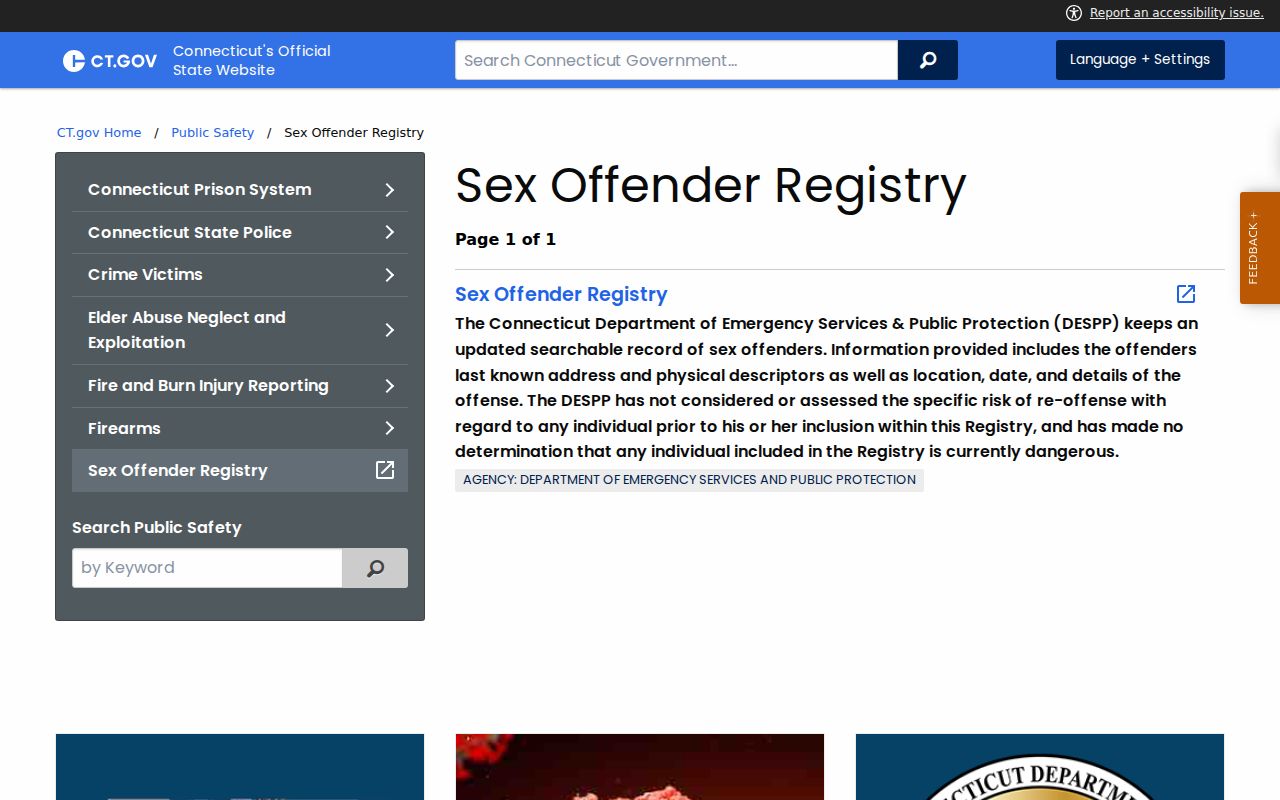
That warning deserves weight. The registry is one narrow public-safety record, not a resident directory and not a finding about anyone's risk.
Connecticut License Records
Connecticut's eLicense service shows whether a named professional credential is active, pending, or inactive. The Department of Consumer Protection says the public search takes license type, prefix or number, status, name, business or DBA, and address fields. A result can carry the credential number and type, effective and expiration dates, a mailing address, and scope or supervisor details. Those last details matter where they apply.
Start with one or two fields. Then open the detail record and read its dates. An entry reflects what the agency has on file. It is not proof the person stands at the listed location today. Older licensing questions or complaint details that public results omit go to DCP. Bring the credential number in hand.
For entities, the Business.CT.gov records search returns names, filing history, principals or agents, and filing addresses. Some electronic images are free to view. Records older than fifteen years may not appear in that online method. Remember that a filing address ties a person to an entity, not to a residence. Trade-name records stay with the town clerk.
Connecticut Privacy and Resident Records
A Connecticut record may omit a name or address for a lawful reason. Safe at Home helps eligible people who moved or plan to move for safety. It gives them a substitute address plus mail forwarding. The Voter Registry Privacy Program can hold back a voter's name and address. That applies when disclosure would endanger them or a family member. The two routes are separate. Never infer a real residential address from a program address.
State law also lets certain officials ask agencies to withhold their home addresses. The Department of Motor Vehicles does not hand out personal driver and vehicle data for a general lookup. An assessor or deed display may read "Current Owner." It may show a parcel address in place of a name. That usually reflects suppression rules, not a broken record.
Personal research. Use Connecticut records for a lawful personal purpose, confirm important details with the custodian, and never use a name or address trail to stalk, threaten, or harass anyone.
The Secretary of the State explains the Safe at Home program. Connecticut's FOI rules spell out address protections too. Even when another source displays a similar address, the public record still follows its own privacy rules.
Connecticut Archives and Resident Records
Connecticut town books reach back to the colonial era. They hold land, vital, church, and meeting records in one place. The State Library has served as the official State Archives since 1909. Its holdings now exceed 55,000 cubic feet, plus five terabytes of electronic files. A name that old may surface through a catalog. It may also surface through a finding aid rather than a simple search box. Contact the History and Genealogy staff before you visit. Some off-site records remain unavailable for now.
Digitization is moving quickly. State Library reporting describes nearly 9,000 vital, probate, church, and military items scanned with FamilySearch in a single year. Most come from the late nineteenth and early twentieth centuries. A separate grant will add roughly 100,000 Connecticut newspaper pages. They are dated 1690 to 1963 and arrive during 2026 and 2027. Search those scans beside town directories, cemetery guides, annual reports, and local newspapers. A digitized page makes a records search easier. Still, not every Connecticut town or year is covered.
An online Connecticut resident lookup may come up empty. This mix of local books and statewide finding aids is the best backstop for a residents directory search. Keep the town, record type, and year with each lead. That habit helps a librarian or records office clerk pull the right series fast, whether you are tracing past residents, neighbors, or property rolls.