
Connecticut City Directory Collections and Their Gaps
Connecticut has no complete statewide run. The Bridgeport History Center has the clearest finding aid and books for several cities and smaller towns. Use its year list, then check the State Library catalog and the local library. A listed year confirms a copy there, not every copy in the state.
| Collection | Years | Where Held | Access |
|---|---|---|---|
| Bridgeport commercial directories | 1855–1990; street listings begin 1895 | Bridgeport History Center | Reading room, microfilm, partial databases |
| Hartford directories | 1921; 1924–25; 1928–31; 1933–71; 1975; 1977–79; 1981; 1983; 1986–88; 1990–91 | Bridgeport History Center; State Library supplements | Check the catalog and ask staff about a specific year |
| New Haven directories | 1906; 1917; 1921–29; 1931; 1933–72; 1974; 1976; 1978; 1980–81; 1983; 1986–91 | Bridgeport History Center; State Library and FamilySearch holdings | Catalog, library access, or local collection |
| New Britain directories | 1929–32; 1934–36; 1938; 1940; 1942–43; 1950; 1953–71; 1973; 1975–76; 1978; 1980–81; 1983–88; 1990 | Bridgeport History Center list; local libraries | Verify each missing year locally |
| Smaller-town books and municipal reports | Gaps; many reports begin around the 1850s | Town libraries, municipal archives, Connecticut State Library | Catalog search, reading room, or local request |
The Hartford, New Haven, and New Britain sequences contain many gaps. Waterbury appears in Connecticut collections, but an official complete run was not located. Do not treat a gap in one finding aid as proof that no copy survives elsewhere. Ask the town library or historical society to search by place, publisher, and the year immediately before or after the one needed.
How Bridgeport's Connecticut City Directory Run Grew
Bridgeport offers a particularly clear local story. Its recorded series begins in 1855 and continues through 1990. The early books are slim; by 1900 they had grown into much larger volumes covering more names, businesses, and organizations. Price and Lee Company, North American Directory Publishers, and other creators appear in the collection description. Each publisher set its own layout, so the fields in one Connecticut book should not be assumed in another.
Street listings begin in Bridgeport in 1895, giving researchers a second route when a name is misspelled, indexed under a spouse, or absent from the alphabetical pages. Later books may add telephone numbers; early entries lean on name, address, and occupation. Each year is a snapshot, not a census.
The Bridgeport History Center directory collection page describes the Connecticut holdings and access routes. The linked collection is useful for setting the likely year range before a visit or catalog search.
- 1855: the first Bridgeport directory in the collection.
- 1895: street listings appear in the Bridgeport run.
- 1990: the latest year in the identified Bridgeport series.
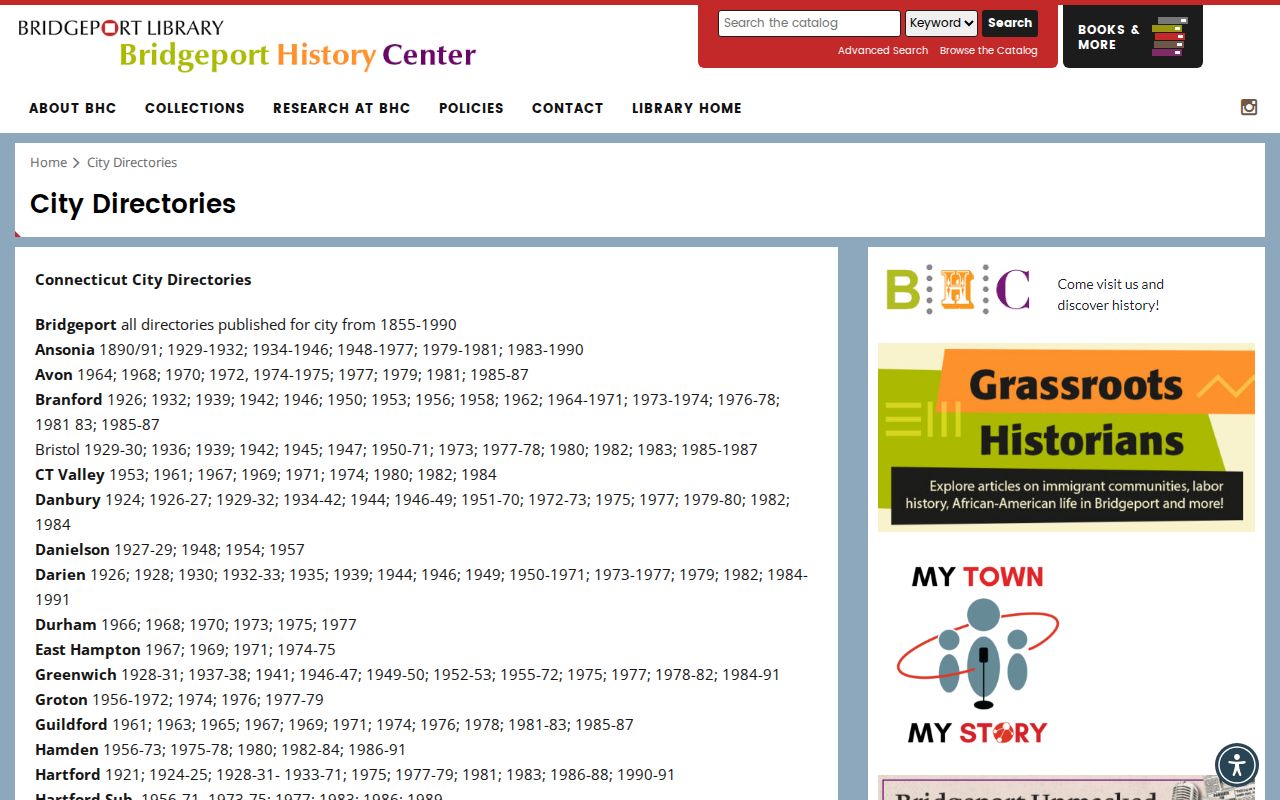
The collection spans more than one publisher and format, so confirm the date and volume label before comparing entries across years.
Connecticut City Directory Gaps Outside Bridgeport
Hartford and New Haven have long runs, but neither list is continuous. New Britain also has substantial clusters with breaks. Those patterns matter when a family seems to vanish for a year: the missing evidence may reflect the shelf, not a move. Connecticut towns beyond the largest cities can have a single yearbook, a commercial directory for a regional area, or no identified standalone volume in a repository list.
Begin with the municipality named in a deed, family paper, newspaper item, or census schedule. Search alternate labels too: a village or postal name may be better known than the legal town, and regional titles can group nearby places. Search catalogs by town and publisher; if no hit appears, ask a librarian about uncataloged shelves and microfilm. Town reports may bridge years.
Connecticut's State Library and Local History Shelves
The Connecticut State Library in Hartford holds local histories, directories, newspapers, town documents, maps, genealogy indexes, and archive finding aids. Its History & Genealogy resources include old-house research. The library is at 231 Capitol Avenue, open weekdays from 10 a.m. to 4 p.m. Reference staff can identify collections and access conditions. An online result is not proof of a current resident.
The catalog and digital collections cover local-government records, vertical files, newspapers, and State Archives finding aids. Online catalogs are free; licensed databases may require a State Library card or onsite visit. Local libraries may have microfilm, yearbooks, cemetery indexes, and database access. Ask first about reader, appointment, and card rules.
The State Archives became official in 1909 and now reports more than 55,000 cubic feet of material and five terabytes of born-digital records. This scale helps explain why a finding aid or reference request may work better than a broad keyword search.
The State Library's collection overview leads to its local-government, newspaper, catalog, and archive routes.
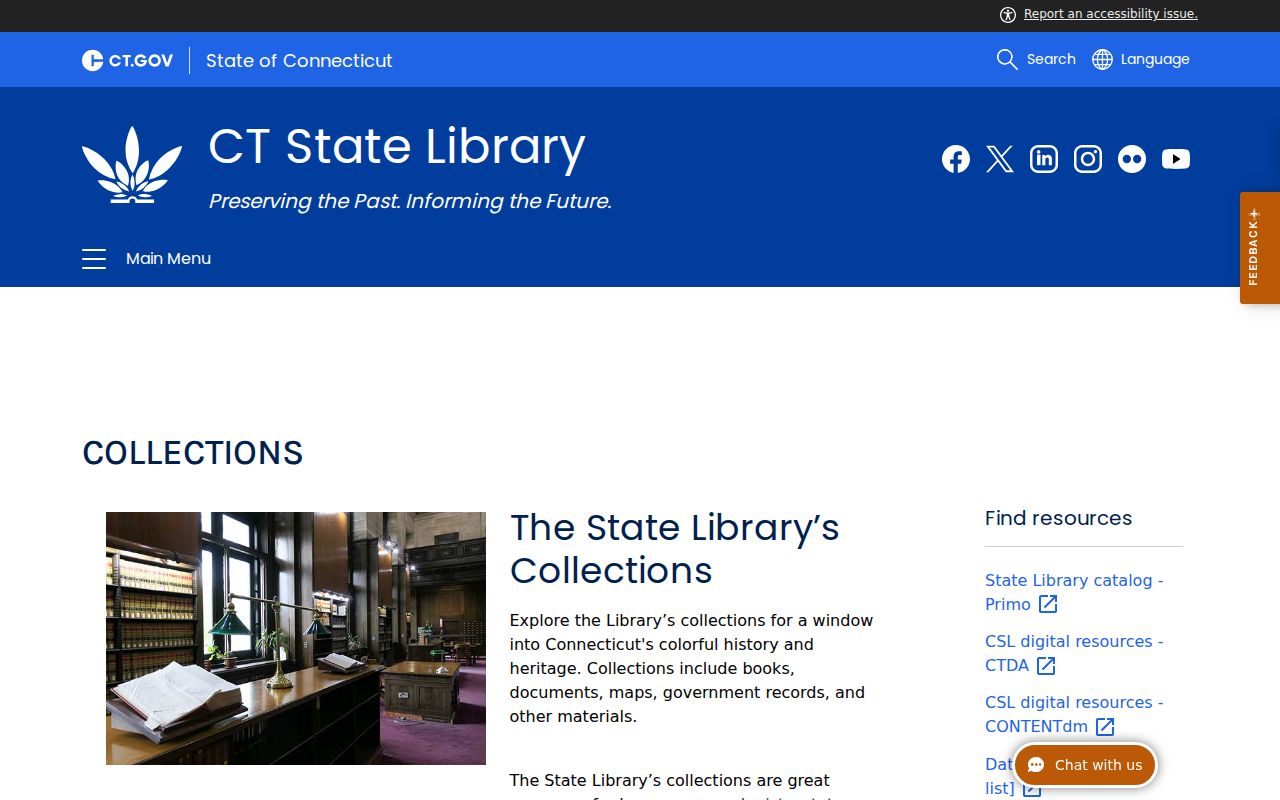
Note the catalog title and repository for each record group; they are not one statewide directory database.
Reading a Connecticut City Directory Entry
A name entry can combine a resident's name with an address, telephone in later volumes, occupation, spouse notation, or a death or widow mark. Businesses and organizations may have their own listings. The actual fields change by publisher and year, and owner or renter symbols are not consistent statewide. Before reading a mark as a fact, check the volume preface and abbreviation key. Do not turn shorthand into a full sentence until the publisher's own definitions support it.
| Alphabetical name | The printed headword; check initials, married names, and spelling variants. |
|---|---|
| Address and telephone | Street location, with telephone more common in later volumes. |
| Occupation and organization | A brief label or separate business listing, when that volume includes it. |
| Spouse or relationship note | May appear in parentheses or a short notation, depending on year. |
| Residence or board mark | Abbreviations such as “r,” “h,” or “bds” vary; use the key. |
| Owner or renter mark | Some volumes use marks, but symbols vary by publisher and year. |
| Death or widow notation | Some years include a death-date or widow clue; do not assume all do. |
- Criss-cross directory
- A street-ordered section that can be searched from a known address.
- Householder index
- An address-based index of a person associated with a home, when a volume provides one.
- Abbreviation key
- The publisher's list of short forms and symbols, usually near the front matter.
Treat an entry as a clue, not a census or deed. Publishers may omit children, boarders, institutional residents, or anyone missed by the compiler.
Using Connecticut City Directories to Trace a Household
For family history, the most useful result is often a sequence rather than a single entry. Start with a known town and likely year from a letter, deed, obituary, or census. Follow the name through nearby annual or five-year volumes, noting the exact spelling and address each time. Connecticut's federal census images provide household detail at decennial intervals; the directory can add address and occupation context between census years.
- Find the earliest likely name entry and copy its wording, address, and nearby page or section.
- Check the street listing for the same address, including a spouse or another listed resident.
- Repeat in the closest available years before and after a move or life event.
- Compare with the federal census, using the census year and enumeration district for the household location.
- Test the chronology against a deed, town report, newspaper notice, or cemetery index.
The census answers questions the directory cannot: who was enumerated in a household, their ages, birthplace, and other recorded relationships. A directory may capture an address annually, but its name line can describe only one adult. Differences are expected because the two sources were compiled for different purposes and at different times.
An absence may reflect a skipped year, suburb limits, name variation, or omission. Check a newspaper, probate file, or cemetery index before drawing a conclusion.
Connecticut Town Reports as People Lists
Municipal annual reports began appearing around the 1850s and grew from basic financial pamphlets into broader records of town work. Depending on the municipality and year, a report may name officials, school visitors, police or fire staff, dog-license holders, poorhouse residents, or people in a tax or vital-statistics list. These are not consistent fields and should never be read as a complete resident roll.
Search town reports when the directory shelves leave a gap or when a person held a public role, attended a school, kept a dog, or appears in a local account. The Connecticut State Library and local libraries hold differing runs. Some reports are digitized; others require a catalog request, microfilm reader, or visit. Town histories, church records, yearbooks, and historical-society files can add context, but membership records are often private or access-restricted.
Cite the report title and date. Its names may describe one civic function or fiscal period, not everyone in town that year.
Connecticut Directories, Newspapers, and Address Clues
Directories, newspapers, and maps answer different parts of a history question. A book may supply a street and occupation; a newspaper notice may identify a marriage, death, move, or civic role. Yale's Connecticut Sanborn collection maps older buildings and streets. The Library of Congress Sanborn guide describes search fields such as city, edition date, and place name.
The State Library describes a broad Connecticut newspaper collection, and Bridgeport History Center holds nineteenth- and twentieth-century papers and clippings. The Connecticut Digital Newspaper Project has a grant to add about 100,000 pages from 1690 through 1963 during 2026–27. Use the headline, date, publication, and image where available.
Connecticut family names may change spelling, hyphenation, or form across a lifetime. Search maiden and married names, initials, alternate transliterations, and a spouse's name. A newspaper obituary, cemetery index, or church record can link a variant, but a second independent source should support that connection.
Compare old place names with a dated plat or town report; postal names and legal municipalities can differ.
Where Connecticut's City Directory Evidence Lives
Begin online with the Bridgeport History Center's Connecticut finding aid and the State Library catalog. Then ask a town library whether the needed book, microfilm, or local report is onsite. A librarian can check an uncataloged local-history shelf or tell you which neighboring repository holds a missing year. Some licensed digital collections require a library card or onsite use; do not assume a scan is openly available from home.
For an in-person search, bring the town, surname variants, likely year range, known address, and the source that supplied each clue. Photograph or transcribe the title page and abbreviation key along with the entry. If travel is not practical, contact the library or archive reference desk and ask whether a staff search or reproduction request is offered. No single statewide research-service fee schedule was located, so confirm any service terms with the holding institution.
The State Library's History & Genealogy research resources connect directory work with census, probate, cemetery, church, newspaper, and town-document collections. The Connecticut previous-residents records path follows one property's dated history.